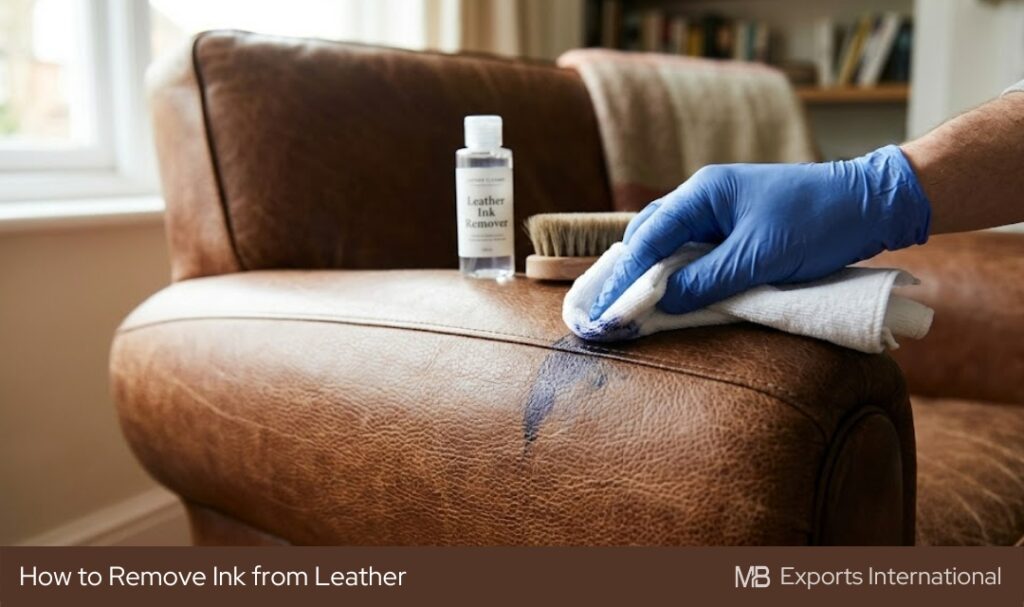
Ink marks on leather can look scary, but in many cases you can remove them at home if you act quickly and use the right method. In this guide, you will learn exactly how to remove ink from leather without causing extra damage.
This article is useful for leather bags, jackets, wallets, sofas, and car seats in everyday homes across the USA, UK, and worldwide.
First: Know Your Leather Type
Before cleaning, check whether your item is:
- Finished/Pigmented leather (most common for bags, sofas, and car seats)
- Aniline or semi-aniline leather (more natural, absorbs stains faster)
- Suede or nubuck (needs different care; avoid liquid DIY methods)
If you are unsure, test any method on a hidden area first.
What You Need
- 2 to 3 soft microfiber cloths
- Cotton swabs
- Distilled water
- Mild soap (or leather cleaner)
- 70% isopropyl alcohol (optional, for stubborn ink)
- Leather conditioner (important after cleaning)
How to Remove Ink from Leather: Step-by-Step
1. Blot, Do Not Rub
If the ink is fresh, gently blot with a dry cloth. Do not rub. Rubbing pushes ink deeper into the grain and spreads the stain.
2. Try Mild Soap First
Mix a tiny amount of mild soap with distilled water. Dampen a cloth (not soaking wet) and gently dab the mark. Wipe with a clean damp cloth and dry immediately.
For light marks, this is often enough.
3. Use Isopropyl Alcohol Carefully (For Set Ink)
If soap does not work, use a cotton swab with a very small amount of 70% isopropyl alcohol.
- Dab only on the ink spot
- Work from the edge toward the center
- Change swabs as ink lifts
- Stop if color transfer appears on the swab
Afterward, wipe the area with a slightly damp cloth and let it air dry.
4. Apply Leather Conditioner
Any cleaner can dry leather. Use a good conditioner after stain removal to restore moisture, softness, and finish.
What Not to Use on Leather Ink Stains
To protect your leather, avoid these common mistakes:
- Do not scrub hard with brushes
- Do not soak leather with water
- Do not use bleach
- Avoid strong solvents unless professional guidance is available
- Do not use acetone on finished leather unless you fully understand the risk
These can cause fading, cracking, stiffness, or surface peeling.
Special Cases
Ink on White or Light Leather
Light shades show stains more clearly. Start with the gentlest method and move slowly. Repeated light dabbing is safer than one aggressive attempt.
Ink on Leather Car Seats
Car leather often has a protective coat, so mild cleaner + careful alcohol spot treatment can work well. Always finish with conditioner to prevent dryness from heat and sunlight.
Ink on Leather Jackets
Jackets can be dyed and delicate. Test before treating visible areas. For premium jackets, a professional leather cleaner is often the safest option.
When to Call a Professional
Home methods may not be enough if:
- Ink has been on leather for a long time
- The stain is large or deeply absorbed
- The leather is aniline, suede, or nubuck
- The item is expensive or sentimental
Professional leather care can often remove stains while preserving color and texture.
Prevention Tips (Saves Time and Money)
- Keep uncapped pens away from leather bags and seats
- Store pens in inner pouches
- Condition leather every few months
- Clean small marks immediately
- Use a leather protector suitable for your leather type
Preventive care is the easiest way to avoid difficult ink removal later.
Quick FAQ
Can ink be removed from leather completely?
In many cases, yes, especially if treated early. Older or deep stains may fade significantly rather than disappear 100%.
Is rubbing alcohol safe for leather?
It can be safe in small amounts on many finished leathers, but always spot test first and condition afterward.
How to remove ink from leather without alcohol?
Start with mild soap and distilled water, or a trusted leather cleaner. This is safer for delicate finishes.
Final Thoughts
If you are wondering how to remove ink from leather, the key is simple: act fast, start gentle, and condition after cleaning. Most damage happens from panic cleaning, not from the stain itself.
Use the method above carefully and you can often restore your leather item to a clean, polished look.