A leather sofa can last for years, but only if you clean it the right way. The good news is that most leather sofas do not need harsh products or complicated treatment. In many cases, a soft cloth, a little mild soap, and the right technique are enough to keep the surface clean and comfortable.
If you have been wondering how to clean leather sofa surfaces without damaging them, this guide will walk you through the safest method step by step. It is written for everyday homes and works well for most finished leather sofas.
First, Check What Type of Leather You Have
Before you clean anything, identify the leather finish if you can.
- Finished or pigmented leather: This is the most common type for sofas. It has a protective coating and is usually the easiest to clean.
- Semi-aniline leather: Softer and more natural-looking, but still reasonably easy to care for.
- Aniline leather: More delicate and absorbent. It needs extra care and gentler cleaning.
- Suede or nubuck: These are not standard sofa leathers and should be cleaned differently.
If you are not sure, test any cleaner on a hidden area first.
What You Need
You do not need much.
- Soft microfiber cloths
- A vacuum cleaner with a brush attachment
- Lukewarm water
- Mild soap or a leather-safe cleaner
- A dry towel
- Leather conditioner
How to Clean a Leather Sofa Step by Step
1. Remove Dust and Loose Dirt
Start by vacuuming the sofa gently. Use a soft brush attachment and clean the seat cushions, backrest, armrests, seams, and corners.
Dust and crumbs may look harmless, but if you wipe them across the surface, they can create tiny scratches. Vacuuming first makes the rest of the cleaning process much safer.
2. Wipe the Sofa with a Dry Microfiber Cloth
After vacuuming, use a clean, dry microfiber cloth to remove any remaining dust. This also helps you see which areas actually need cleaning and which areas just need a light refresh.
3. Make a Gentle Cleaning Solution
Mix a very small amount of mild soap with lukewarm water. The cloth should be damp, not wet.
Too much water is one of the biggest mistakes people make when cleaning leather sofas. Leather should never be soaked.
4. Test on a Hidden Spot
Before cleaning the whole sofa, test the solution on a hidden area such as the back or underside of a cushion.
Wait a few minutes and check for:
- Color change
- Dullness
- Sticky residue
- Water marks
If the test area looks fine, continue.
5. Clean the Surface in Small Sections
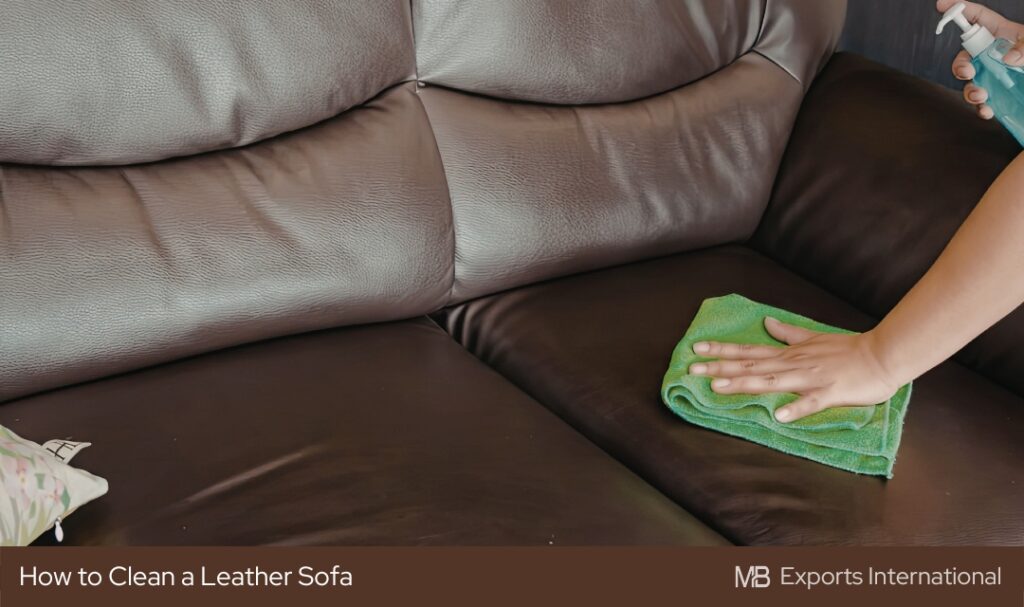
Dip a cloth into the solution and wring it out well. Wipe one small section at a time using gentle circular motions or straight strokes.
Do not scrub hard. Leather is strong, but the finish can still be damaged by friction.
6. Wipe Away Soap Residue
Use a second cloth slightly dampened with clean water to remove any soap left behind. Then dry the area with a clean towel.
This step matters because soap residue can make leather feel sticky or look cloudy over time.
7. Let the Sofa Air Dry Naturally
Leave the sofa to dry on its own in a cool, ventilated room. Keep it away from direct sunlight, heaters, and hair dryers.
Heat can dry out leather too quickly and may cause cracking or fading.
8. Apply Leather Conditioner
Once the sofa is fully dry, apply a leather conditioner if the manufacturer recommends it. Conditioner helps restore softness and helps prevent the leather from becoming stiff.
Use a small amount and follow the product instructions. More is not better here.
How to Remove Common Sofa Stains
Food or Drink Spills
Blot the spill immediately with a dry cloth. Do not rub. Once the area is dry, clean it with the mild soap solution.
Body Oil and Everyday Grime
Areas like armrests and headrests often collect natural oils. These spots usually clean well with a damp cloth and mild soap, but they may need a second pass.
Ink Marks
Ink needs a separate approach. Use a leather-safe ink removal method or a very small amount of isopropyl alcohol on a cotton swab only if the leather finish can handle it. Always spot test first.
Grease or Oily Stains
For fresh grease, blot gently and avoid spreading it. Older grease stains are harder to remove and may need professional cleaning.
Pet Marks
Use a leather-safe cleaner designed for household use. Avoid soaking the area, especially if the sofa has seams where liquid can collect.
What Not to Use on a Leather Sofa
Some common home remedies can do more harm than good.
- Do not use bleach
- Do not use ammonia-based cleaners
- Do not scrub with rough brushes or scouring pads
- Do not soak the leather with water
- Do not use baby wipes unless the label clearly says they are safe for leather
- Do not use vinegar on finished leather unless a professional specifically recommends it
- Do not put the sofa in direct sunlight to dry
These products and habits can strip the finish, dry the leather, or leave permanent marks.
How Often Should You Clean a Leather Sofa?
For most homes, a light clean every 1 to 2 weeks is enough. That usually means vacuuming and wiping away dust.
Do a deeper clean every 2 to 3 months, or sooner if the sofa gets heavy use, has pets, or is placed in a busy family room.
Conditioning is usually needed every 3 to 6 months, but follow the instructions for your specific leather and conditioner.
Simple Habits That Keep Leather Sofas Looking Better for Longer
- Vacuum regularly to stop dirt from building up
- Wipe spills as soon as they happen
- Keep the sofa away from direct sunlight
- Use throws or cushions in high-use areas
- Condition the leather when it starts to feel dry
- Avoid eating oily foods directly on the sofa
Small habits make a big difference. Leather ages better when it is cleaned gently and consistently.
When to Call a Professional
It is better to stop and get help if:
- The sofa is aniline, suede, or nubuck
- The stain is old or deeply absorbed
- The leather is cracking, peeling, or very dry
- You see color transfer during the test spot
- The sofa is expensive or custom-made
Professional leather cleaners have stronger products and more experience with delicate finishes.
Quick Answer: How Can I Clean Leather Sofa Safely?
Vacuum it first, wipe it with a slightly damp cloth and mild soap, dry it properly, and finish with conditioner if needed. The key is to stay gentle, use very little water, and always test before cleaning the whole surface.
If you want the sofa to last, regular light cleaning is much better than occasional heavy cleaning.
FAQ
You can remove light dust with a barely damp cloth, but water alone will not remove grease or everyday grime very well. A mild soap solution or leather-safe cleaner is usually better.
It is not the safest choice for most leather sofas. Vinegar can dry out the surface and may affect the finish.
A very small amount of mild dish soap can work on many finished leather sofas, but use it sparingly and test first.
Clean it gently, keep it out of harsh sunlight, and use a leather conditioner when the surface starts to feel dry.