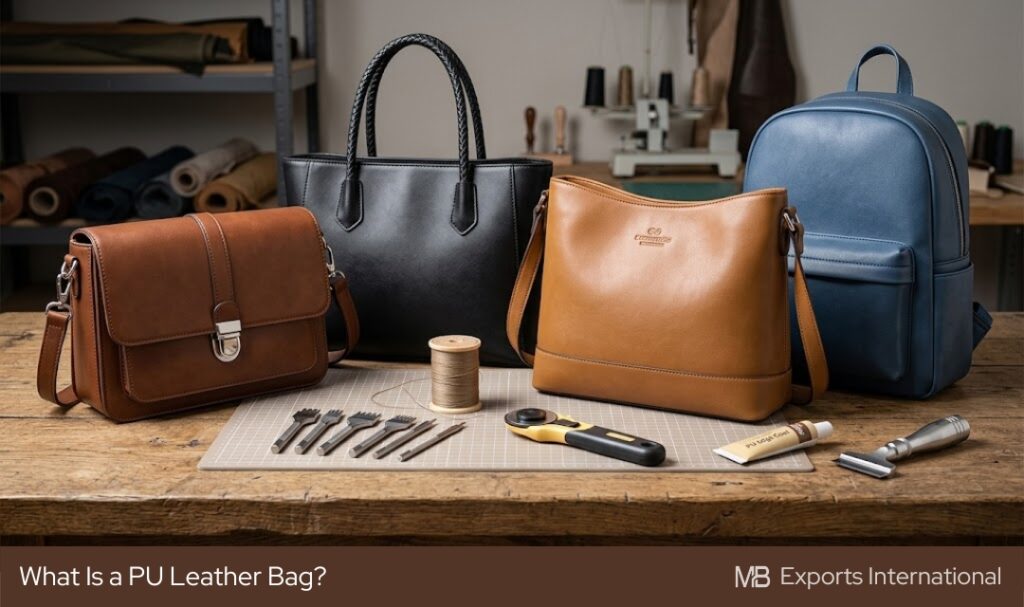
You’ve seen it everywhere. A bag that looks like leather, feels almost like leather, costs a fraction of the price, and is labeled “PU material” or “PU leather.” But what exactly is it, and does it hold up?
Here’s the honest version.
What Is PU Material?
PU stands for polyurethane. It is a synthetic plastic material coated onto a fabric base, usually polyester. The result looks and feels like leather on the surface, but there is no actual animal hide underneath.
It is 100% man-made. No tanning, no natural grain, no hide. Just a polymer coating designed to mimic the look of leather.
Some PU bags use something called bicast leather, which takes the leftover scraps from real leather production and bonds a polyurethane layer on top. This is still largely synthetic and behaves more like PU than real leather.
You will also see PU material sold under other names: faux leather, vegan leather, synthetic leather, artificial leather. Different names, same thing.
Is a PU Material Bag Good?
Short answer: it depends on what you need it for.
Where PU bags actually do well:
- They are affordable. A bag that would cost you 5x more in genuine leather can cost very little in PU.
- They are easy to clean. Spill something? Wipe it off. PU does not absorb water or stain the way real leather does.
- They come in every color imaginable. The surface takes dye evenly, so brands can offer a full range of shades without limitations.
- They are vegan. No animals involved in production.
- They are lighter than real leather bags of the same size.
Where PU bags fall short:
- They crack and peel. This is the big one. After 2 to 4 years of regular use, the polyurethane coating starts to break down, especially at corners, handles, and fold lines. Once it starts peeling, there is no fixing it.
- They do not breathe. The synthetic surface traps heat and moisture, which matters when you are carrying the bag in warm weather.
- They can smell. New PU bags often have a chemical or plastic odor that takes time to fade, if it fades at all.
- They do not develop a patina. What you see on day one is what you get on year three, minus the parts that have started peeling.
- They are not eco-friendly despite the “vegan” label. Polyurethane is plastic. It does not biodegrade and creates pollution during production.
PU Bag vs Genuine Leather Bag
| PU Material Bag | Genuine Leather Bag | |
|---|---|---|
| Material | Synthetic plastic coating on fabric | Real animal hide |
| Price | Low | Higher |
| Durability | 2 to 5 years before cracking | Decades with care |
| Patina/aging | Does not age well | Gets better with age |
| Water resistance | High (wipes clean) | Low without treatment |
| Breathability | Poor | Good |
| Smell | Chemical/plastic | Natural leather smell |
| Eco impact | Plastic waste | Biodegradable |
| Vegan | Yes (100% PU) | No |
How to Spot a PU Bag Before You Buy
If the label is vague, here is how to tell:
- Smell it. Real leather has a distinct natural smell. PU smells like plastic or chemicals.
- Look at the texture. PU has a perfectly uniform, repeating grain pattern. Real leather has slight variations and natural marks.
- Check the edges. Real leather has a fibrous or burnished edge. PU shows the fabric backing underneath.
- Feel the weight. Real leather is noticeably heavier than PU for the same bag size.
- Price check. A bag priced suspiciously low for “leather” is almost certainly PU.
A Note from MB Exports
At MB Exports, we manufacture and export genuine leather bags and accessories from India. We work with real hides because we know what our customers are getting and how long it will last them.
If you are sourcing leather goods for your brand and want a manufacturer who is upfront about materials, get in touch with us.