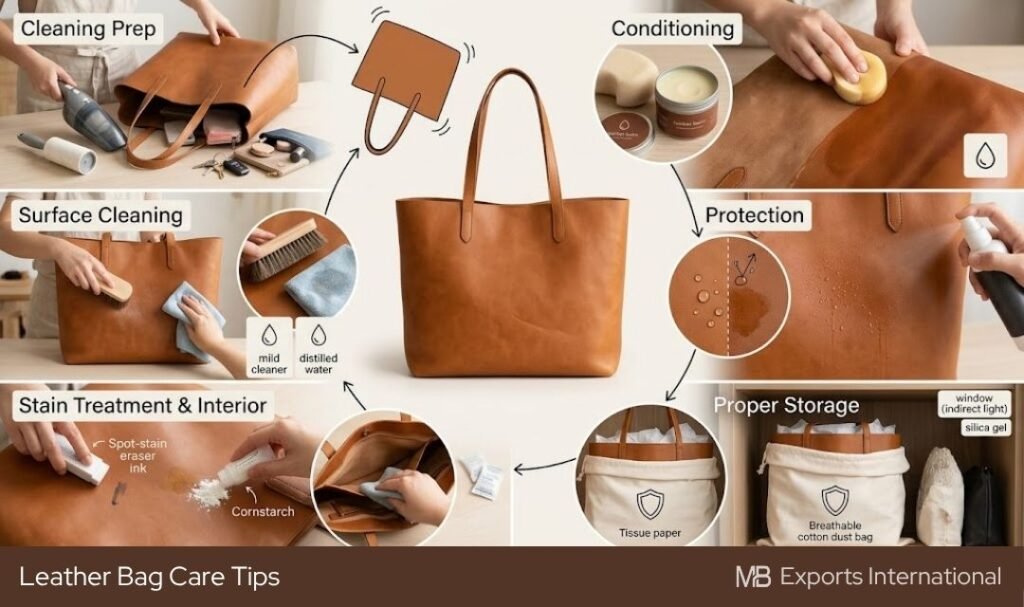
A leather bag that is properly cared for looks better at five years than it did on day one. One that is neglected looks rough by year two. The difference is not complicated, and it does not take much time.
Here is everything you actually need to know, without the fluff.
What You Need
You do not need a long list of products. Three things cover 90% of all leather bag care:
- A soft, dry cloth (microfibre works well)
- A leather cleaner or mild saddle soap
- A leather conditioner (or neatsfoot oil or beeswax for natural options)
That’s it. Anything beyond that is optional.
How to Clean a Leather Bag
For everyday dust and light surface dirt: Wipe the bag down with a dry or barely damp soft cloth. Do this as often as you like. It takes 30 seconds and keeps surface grime from building up.
For deeper cleaning (every 3 to 6 months): Apply a small amount of leather cleaner to a soft cloth, not directly to the bag. Wipe in gentle circular motions across the surface. Then go over it with a clean damp cloth to lift any residue. Let it dry naturally at room temperature before moving to the conditioning step.
What to avoid:
- Never soak leather in water
- No baby wipes, they contain alcohol and lotion that damage the surface over time
- No household cleaning sprays, bleach, or anything not made for leather
- No hairdryer to speed up drying, it cracks the leather
If the bag gets caught in rain, wipe off the surface water immediately with a dry cloth, stuff it with newspaper to hold the shape, and leave it to air dry away from direct heat. Once dry, condition it.
Handling Common Problems
- Light scratches: Most surface scratches on full grain leather can be rubbed out with your fingertip. The natural oils from your skin soften the surface and the scratch blends in. For deeper scratches, a small amount of conditioner worked into the area usually helps.
- Water stains: Act fast. Blot the water with a dry cloth. Do not rub. Let the whole bag surface get slightly damp with a clean damp cloth so the watermark dries evenly rather than leaving a ring. Then let it air dry and condition afterwards.
- Ink stains: Ink is one of the harder problems. A leather-specific ink remover is your best bet. Do not use rubbing alcohol. Test any product on a hidden area first before going near the stain.
- Mould or mildew: If you open a stored bag and find mould, take it outside and wipe the surface with a cloth dampened with a 50/50 mix of water and white vinegar. Let it dry fully in fresh air, then condition the leather. Vinegar kills mould without damaging the leather surface the way harsh cleaners would.
- Colour fading: Fading happens gradually with sun exposure. A good leather conditioner with a slight tint can restore some depth. For serious fading, a leather dye or a professional leather restorer is the better option.
Leather Bag Care by Leather Type
Not all leather responds exactly the same way. Here’s what to know:
- Full grain leather: The most forgiving. Takes conditioning well, develops a patina naturally, and handles life without needing constant attention. Condition every 3 to 6 months.
- Top grain leather: Slightly more sensitive since the surface has been refinished. Responds well to conditioning but avoid over-applying, it can darken the surface. Condition every 3 to 4 months.
- Genuine leather: Needs more attention because the lower hide layers dry out faster. Condition every 2 to 3 months and be more careful about moisture and stress on seams.
- Nappa leather: Soft and smooth but more prone to surface scratches and scuffs. Use a lighter conditioner and handle it more carefully. Avoid overstuffing nappa bags.
Quick Leather Bag Care Schedule
| Task | How often |
|---|---|
| Wipe down with dry cloth | Weekly or after use |
| Deep clean with leather cleaner | Every 3 to 6 months |
| Condition | Every 3 to 6 months (more in dry climates) |
| Check and clean lining | Every 3 months |
| Air out if stored | Every 2 to 3 weeks |
| Condition after getting wet | Every time |
What Shortens a Leather Bag’s Life the Fastest
From a manufacturing perspective, here is what damages leather bags before their time:
Neglecting conditioning until the leather is already cracking. At that point, conditioning helps but cannot fully reverse the damage. Prevention is much easier than repair.
Overpacking consistently. This stresses the stitching at handle attachment points, the base seams, and the zip area. Carry a bag sized for what you actually need.
Leaving it in a car. The heat inside a parked car in summer can exceed 60 degrees Celsius. This dries out leather aggressively and fades colour fast.
Using the wrong products. Petroleum-based products, furniture polish, and generic soap strip the natural oils from leather and leave a residue that blocks future conditioning. Use products made for leather.
About MB Exports
At MB Exports, we manufacture and export leather bags and accessories from India. We build products intended to last years, not seasons, which is why care guidance is something we take seriously.
If you are sourcing leather goods for your brand and want a manufacturer who understands the material from hide to finished product, get in touch with our team.