A leather bag is one of those purchases that follows you everywhere for years. Getting the wrong style for how you actually live means carrying something that constantly works against you. Getting it right means you stop thinking about it.
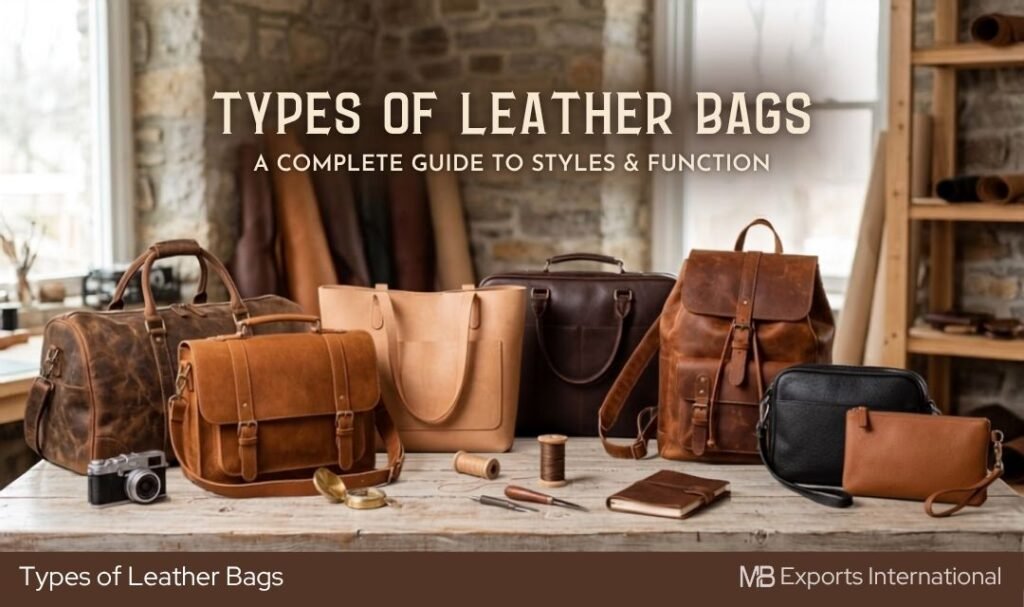
Here is a straight breakdown of every major type of leather bag, what it is built for, and who it works for.
1. Tote Bag
The most versatile bag on this list. Open top, two handles, large interior with no compartments or very few. It fits everything and asks nothing of you in return.
Works for: daily carry, office, shopping, travel days when you want everything accessible fast.
What to know: Because it is open, security is minimal. Not great for crowded cities. Full grain leather totes hold their shape better than soft chrome-tanned versions as they age.
2. Crossbody Bag
Worn across the body, hands stay free, weight distributes evenly across one shoulder. Compact by design.
Works for: travel, commuting, days when you carry only the essentials (phone, wallet, keys, one more thing).
What to know: Size matters here. Too small and it becomes useless. Too large and it defeats the purpose. Most people end up with a medium crossbody that handles 80% of their days.
3. Messenger Bag
Larger than a crossbody, still worn across the body, with a wide flap closure and a flat profile. Originally designed for bicycle couriers.
Works for: carrying a laptop and documents without looking like you are carrying a backpack. Professional without being formal.
What to know: The flat design is what makes it good for documents and laptops. If you carry round, bulky items the shape fights you. Best in structured leather (veg-tanned, 4 to 5 oz) so it holds its form.
4. Backpack
Two shoulder straps, weight distributed evenly across the back. Hands completely free.
Works for: commuting, travel, any situation where you need to carry real volume (laptop, charger, change of clothes, lunch, etc.) without destroying your shoulder.
What to know: Leather backpacks are heavier than nylon equivalents before you put anything in them. If weight is a concern, go for top grain over full grain. Full grain backpacks are heavier but will look extraordinary in ten years.
5. Briefcase
Hard-structured, formal, usually with a top handle and secure closures. Built to carry documents, a laptop, and work essentials in an organized way.
Works for: corporate professionals, lawyers, anyone who walks into formal meetings regularly.
What to know: Briefcases are the most formal bag on this list. They do not work casually. If you want something that transitions between office and weekend, a messenger or satchel will serve you better.
6. Satchel
Structured like a briefcase but slightly boxier and more casual. Usually has a long shoulder strap in addition to a top handle.
Works for: work and school environments where you want something more structured than a tote but less formal than a briefcase.
What to know: The satchel is the middle ground bag. It looks intentional and organized without requiring a suit to match. Full grain or top grain leather holds the structure best.
7. Duffel Bag
Cylindrical or rectangular, large capacity, built for packing. Can be carried by top handles or a shoulder strap.
Works for: overnight trips, gym, weekend travel, anyone who resists using a hard suitcase.
What to know: Leather duffels are heavy when empty. The weight is worth it for durability and look, but if you are going to pack it full and carry it through airports, factor that in. Canvas-and-leather combinations give you the look with less weight.
8. Clutch
Small, handheld, minimal. Carries just the essentials and nothing more.
Works for: evenings out, events, situations where you need to carry almost nothing and want the bag itself to make a statement.
What to know: Clutches are not daily bags. They are occasion bags. Nappa leather clutches have the best look and feel for formal occasions. Full grain is usually too stiff for clutches to look right.
9. Bucket Bag
Round-ish base, open or drawstring top, usually carried on the shoulder or in the crook of the arm.
Works for: casual daily use, when you want something with personality rather than structure.
What to know: Bucket bags look excellent in soft chrome-tanned leather. The relaxed silhouette does not work well in stiff veg-tanned leather. They are not as practical as totes or crossbodys for high-volume daily carry because the round shape wastes interior space.
10. Shoulder Bag
A broad category that covers any bag worn on one shoulder with a medium-length strap. More compact than a tote, less structured than a satchel.
Works for: everyday carry when you want something between a crossbody and a tote.
What to know: The strap length determines how this bag wears. A shorter strap sits under the arm. A longer strap sits at the hip. Worth checking adjustability before buying.
Which Leather Works Best for Each Type
The leather grade matters as much as the style:
Full grain leather is best for bags that need to hold structure over years: briefcases, satchels, messenger bags, belts, backpacks. It stiffens under load rather than collapsing.
Top grain leather works well for totes and shoulder bags where some softness is an advantage. It looks polished and handles daily use without the initial stiffness of veg tan.
Nappa leather (soft chrome-tanned, often lambskin or calfskin) is the right choice for clutches, bucket bags, and anything where drape and softness matter more than rigidity.
Avoid genuine leather and bonded leather in any bag you plan to carry daily. The lower hide layers and leather-scrap construction simply do not hold up to regular load and movement.
About MB Exports
At MB Exports, we manufacture and export all major leather bag types from India, working with full grain and top grain leather across our range. If you are a brand sourcing leather bags in bulk or looking for private label manufacturing, get in touch with our team.