You pick up a wallet. It feels substantial. The smell hits you immediately. Something about it feels different from every other leather product you’ve touched. There’s a good chance what you’re holding is vegetable tanned leather.
So what exactly is it? And why do people who really know leather almost always choose it?
What Is Vegetable Tanned Leather?
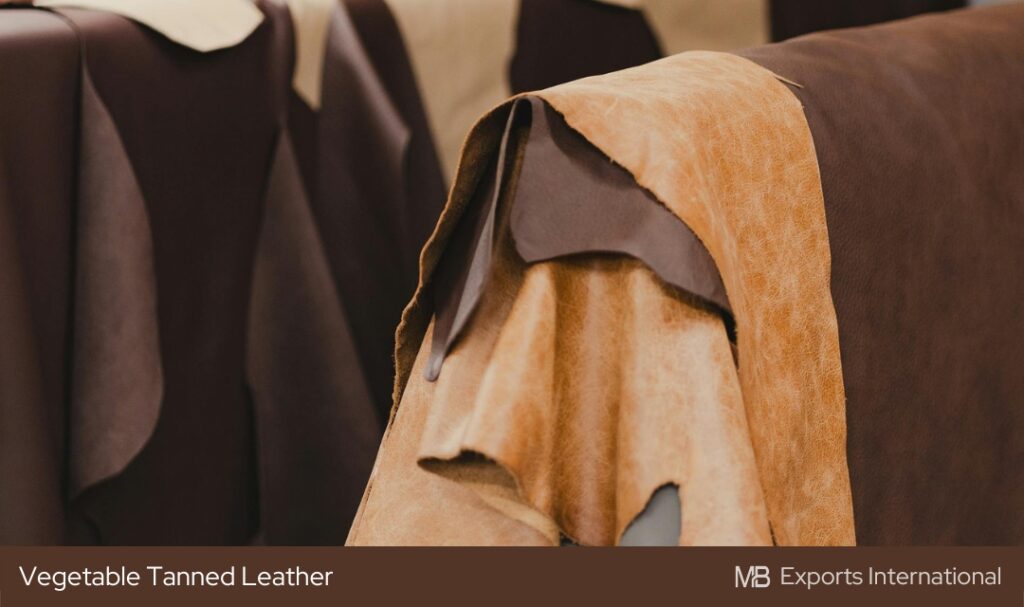
Vegetable-tanned leather is leather made using natural tannins found in plant materials like tree bark, leaves, wood, and fruits. Oak, chestnut, mimosa, and quebracho are the most commonly used sources.
These organic tannins bind with the collagen fibres inside the animal hide, slowly transforming raw skin into firm, stable, long-lasting leather. No synthetic chemicals. No shortcuts.
It is one of the oldest forms of leather production in the world, and it still produces the highest quality results available today.
A quick note: vegetable tanned leather is not the same as vegan leather. Veg tan is genuine animal leather. The “vegetable” refers only to the tanning process, not the material itself.
How is Vegetable-Tanned Leather Made?
The process is slow on purpose. That slowness is what makes the leather what it is.
Step 1: Preparation
The raw hide is soaked, cleaned, and dehaired. This opens up the fibre structure so the tannins can penetrate evenly throughout the hide. Rushing this stage produces uneven leather that won’t age well.
Step 2: Tanning in Pits
The hides are moved through a series of pits filled with tannin solutions, each one slightly more concentrated than the last. The leather absorbs the tannins gradually, from the outside in. This stage takes 30 to 60 days.
For comparison: chrome tanning takes one day. That difference in time is the difference in quality.
Step 3: Drying and Conditioning
Once tanned, the leather is dried slowly and then treated with natural oils and fats. This step restores flexibility and prevents the fibres from becoming brittle.
Step 4: Finishing
The surface is smoothed and prepared for use. Unlike chrome-tanned leather, veg tan is rarely coated with synthetic polymers. The natural surface stays open, which is exactly what allows it to develop character over time.
Vegetable Tanned vs Chrome Tanned Leather
Most leather sold today is chrome-tanned. It is faster, cheaper, and easier to produce at scale. That is why it dominates the industry. But faster and cheaper comes with real tradeoffs.
| Feature | Vegetable Tanned | Chrome Tanned |
|---|---|---|
| Tanning agent | Plant tannins | Chromium sulphate |
| Production time | 30 to 60 days | 1 to 2 days |
| Feel | Firm, structured | Soft, pliable |
| Develops patina | Yes | No |
| Water resistance | Lower initially | Higher |
| Durability | Decades | Shorter lifespan |
| Environmental impact | Low | High (toxic waste) |
| Price | Higher | Lower |
Chrome-tanned leather is not always bad. It works well for soft goods like garments and upholstery. But for anything you want to carry daily and keep for years, vegetable tanned leather is in a different league.
The Patina: The Reason People Fall in Love with Veg Tan
Here is what no chrome-tanned leather can replicate.
Because vegetable-tanned leather has no synthetic surface coating, it breathes. It absorbs your skin’s natural oils, moisture from the environment, and light from the sun. Over months and years, this creates what is called a patina: a gradual deepening of colour and richness that is completely unique to how you use the piece.
A veg tan wallet carried in your front pocket for three years will look like no other wallet on earth. The corners will darken first. Then the areas where your fingers grip it most. Eventually, the whole surface develops a warm, honey-like depth that factory-fresh leather simply cannot replicate.
That is not fair. That is the leather maturing into something better.
Chrome-tanned leather cannot do this. Its chemical surface coating blocks absorption entirely, so the piece looks the same in year five as it did in week one. Often worse, because the coating begins to crack.
Pros and Cons of Vegetable Tanned Leather
Why people love it:
- Lasts for decades. A well-maintained veg tan piece can genuinely outlast the person who bought it.
- Develops a personal patina that is unique to you and how you use it.
- No harmful chemicals near your skin.
- Holds its structure. Perfect for bags, belts, wallets, and anything that needs to keep its shape.
- Has that unmistakable natural leather smell, which comes from the organic tanning process.
- Fully biodegradable at end of life.
What you should know before buying:
- It feels stiff at first. This is normal. It softens with use and moulds to your body over time.
- It costs more. The longer production process and skilled labour mean higher prices. That cost is justified by the lifespan.
- It is not naturally water-resistant. You will want to treat it with leather conditioner, neatsfoot oil, or beeswax, especially in wet climates.
- Colour options are more limited than chrome-tanned leather. Veg tan takes natural dyes beautifully, but vivid synthetic colours are harder to achieve.
What Is Vegetable Tanned Leather Used For?
Its firmness and structure make it ideal for products that need to hold their shape and survive daily use.
Most common uses include:
- Belts and straps
- Wallets, cardholders, and bifolds
- Tote bags, briefcases, and satchels
- Saddles and equestrian equipment
- Holsters and knife sheaths
- Leather shoes and boots
- Watch straps
- Journal covers and desk accessories
It is not the right choice for clothing or soft upholstery, where pliability matters more than structure. Chrome-tanned leather performs better in those applications.
How to Care for Vegetable Tanned Leather
Veg tan is forgiving if you treat it with basic care. Here is what actually matters:
Condition it regularly. Use a leather conditioner, neatsfoot oil, or beeswax a few times a year, more often in dry or cold climates. This prevents the fibres from drying out and cracking.
Let it dry naturally if it gets wet. Do not use a hairdryer or leave it near a radiator. Stuff it with newspaper to hold its shape and leave it to air-dry at room temperature.
Use it. Daily handling speeds up patina development. The oils from your hands are part of what makes veg tan age so well. Keeping it in a drawer does nothing for it.
Clean gently. A dry cloth handles most surface dust. For deeper cleaning, a slightly damp cloth is enough. Avoid harsh soaps or chemical cleaners.
Store it away from plastic. Plastic traps moisture against the leather and encourages mould. A cotton dust bag or open shelf is better.
Is Vegetable Tanned Leather Worth the Higher Price?
Think about it this way: a quality veg tan belt bought today could still be in daily use in 2045. The same is rarely true of chrome-tanned alternatives.
The price premium exists because the production process genuinely costs more: slower tanning, skilled tannery workers, better raw hides. When you pay more for vegetable-tanned leather, you are paying for something that lasts, not just something that looks good in the shop.
If you buy once and buy right, veg tan almost always works out cheaper in the long run.
A Note from MB Exports
At MB Exports, we manufacture and export genuine leather goods from India. We work with vegetable-tanned leather because we understand the difference between leather made to look good on day one and leather built to last for years.
If you are sourcing premium leather products for your brand or looking for a trusted Indian leather manufacturer and exporter, get in touch with us.