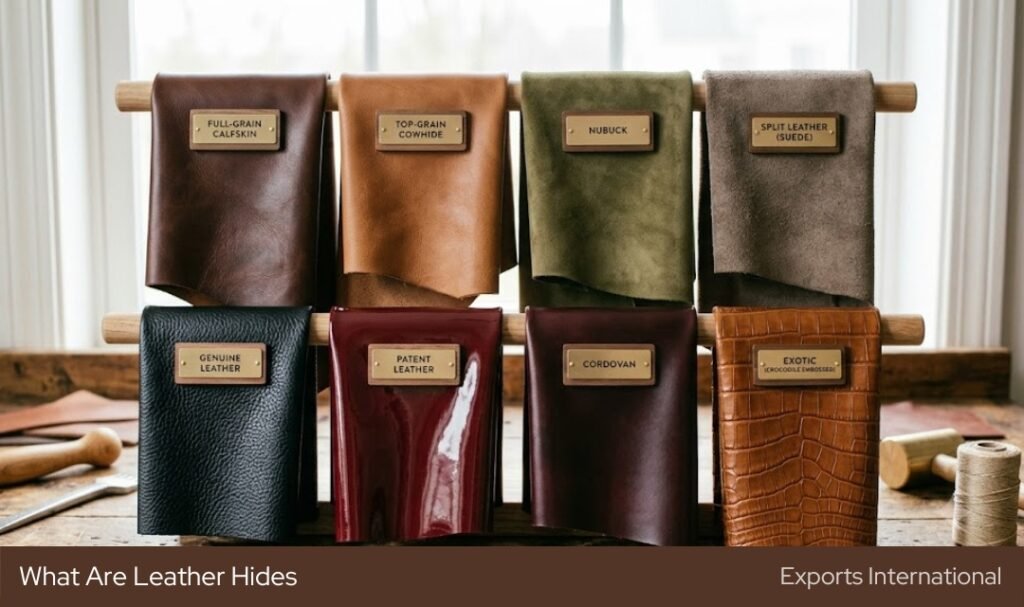
When someone says they make leather goods from “full hides,” that sounds premium. And it often is. But not every part of a hide is equal, and this is something most leather buyers never find out until they’re holding a finished product that stretched in the wrong place or wore out too fast.
Here’s what a leather hide actually is, why different sections behave differently, and which part ends up in which product.
What Is a Leather Hide?
A hide is the full skin of a large animal, most commonly cattle, that has been removed, cleaned, and tanned into leather. Think of it as the raw material before anything is cut.
One full cattle hide gives you roughly 40 to 60 square feet of leather. That’s a lot of surface area, and not all of it is the same quality.
The skin of a live animal is built for movement. The back barely moves. The belly expands and contracts constantly. The neck swings in every direction. Those movement patterns leave a permanent mark on the fibre structure of the hide, which is why different sections have completely different characteristics even after tanning.
The Parts of a Leather Hide
1. Full Hide
The whole skin of the animal in one piece, including all sections. It’s the most flexible to work with because you can plan your cuts around the best areas and avoid blemishes. Furniture makers, large bag manufacturers, and saddlery producers typically buy full hides.
Most small-scale leather goods brands won’t buy full hides because the surface area is too large for their needs. They buy specific cuts instead.
2. Half Hide (Side)
A full hide split vertically down the backbone gives you two sides. Each side includes part of the shoulder, belly, and back. A side is one of the most common ways leather is sold commercially.
The tradeoff with a half hide is that you lose flexibility. If a blemish falls in a critical area, you have less room to work around it than you would with a full hide.
3. Shoulder
The shoulder comes from the neck and front leg area of the animal. Because the neck moves constantly during the animal’s life, the leather here is firm but has some give to it.
It is not as strong as the bend, but it is more flexible and still consistent enough for quality work. Shoulder leather is one of the most popular cuts for everyday leather goods.
Best used for: bag straps, handles, medium-weight belts, satchels, tool pouches.
4. Butt / Bend
The butt (sometimes called the single bend or double bend) comes from the rump area, the back half of the animal near the hindquarters. This is the most stable part of the hide. The animal barely moves this area during its life, which means the fibres are packed tightly and consistently.
This is the most premium cut of a hide. Tightly packed fibres mean more strength, less stretch, and a more uniform grain. It’s also the most expensive cut.
Best used for: heavy-duty belts, bridles, holsters, saddlery, quality wallets, anything that needs to hold its shape under daily load.
5. Back / Half Back
The shoulder and butt combined, with the belly removed. This gives you the strongest sections of the hide in one cut and is useful when you need long, clean runs of leather without the inconsistency of the belly.
Best used for: belts, straps, long cuts for saddlery.
6. Belly
The belly comes from the underside of the animal and the tops of the legs. This part expanded and contracted the most during the animal’s life, which means the fibres are looser, stretchier, and less consistent in thickness.
It is the weakest, most uneven part of the hide. Good tanneries can improve it, but it will never match the shoulder or butt in quality.
Best used for: small accessories, decorative pieces, beginner practice work, coin pouches, key fobs.
Most budget leather goods are cut from belly sections because the cost is lower. This is why two bags that look identical on a shelf can behave very differently after six months of use.
Hide Parts at a Glance
| Section | Location | Fibre Strength | Consistency | Best For |
|---|---|---|---|---|
| Full hide | Entire skin | Varies | Varies | Upholstery, large production |
| Half hide / Side | Left or right half | Varies | Varies | Commercial cutting |
| Shoulder | Neck and front | Medium-high | Good | Bags, straps, medium belts |
| Butt / Bend | Rump, back half | Highest | Excellent | Belts, holsters, saddlery, wallets |
| Back / Half back | Shoulder + butt | High | Very good | Long belt strips, straps |
| Belly | Underside, legs | Low | Poor | Small items, practice work |
Why This Matters When You’re Buying Leather Goods
A brand can use full grain leather and still produce an inferior product if they’re cutting from the belly. A brand can use vegetable-tanned leather and charge premium prices for pieces that came from the weakest part of the hide.
“Full grain” tells you the layer. The hide section tells you the quality within that layer. Both matter.
When sourcing leather goods at volume, always ask where on the hide your pieces are being cut from. A reputable manufacturer will know the answer. If they don’t, that’s information too.
About MB Exports
At MB Exports, we manufacture and export leather goods from India to all over the world. We work with full grain and top grain leather and are specific about which hide sections go into which products. Quality control starts at the hide, not the finished product.
If you’re sourcing leather goods for your brand and want a manufacturer who understands the material, get in touch with us.