You see “nappa leather” on a jacket, a car seat, or a luxury handbag and immediately wonder: is this actually good leather, or just another fancy-sounding word for something ordinary?
It’s actually good leather. Here’s what it is.
What Is Nappa Leather?
Nappa leather is full-grain or top-grain leather that has been tanned and finished to be exceptionally soft and smooth. The name comes from Napa, California, where a German tanner named Emanuel Manasse first developed the process in the 1870s while working at The Sawyer Tanning Company.
He discovered that treating hides with chromium or aluminum sulphate produced leather that was incredibly soft without sacrificing strength. That process became known as Nappa tanning, and the name stuck.
What sets nappa apart is not the animal it comes from or the part of the hide used. It’s the tanning and finishing process that produces that signature buttery, smooth feel. Think of it as a style of leather processing rather than a completely separate type of leather.
Is Nappa Leather Real Leather?
Yes, 100%. Nappa leather is genuine animal hide.
It is most commonly made from:
- Lambskin – the softest, most luxurious version, used in high-end fashion
- Kidskin (young goat) – fine-grained, extremely supple
- Calfskin – slightly more durable than lamb, still very soft
- Cowhide – less common for nappa, but used in automotive and upholstery applications where a larger hide is needed
The quality of nappa leather varies depending on which animal it comes from and which part of the hide was used. Lambskin nappa is at the top. Cowhide nappa is more practical and affordable.
What nappa leather is not: it is not synthetic leather, PU leather, or bonded leather. If you’re buying genuine nappa leather, you are buying real animal hide.
What Is Nappa Leather Made Of?
The process that makes nappa what it is has a few key steps:
The hide selection: Fine-grained hides from younger animals are preferred because the grain is tighter and the fibre structure produces a smoother surface. This is why lambskin and kidskin are so closely associated with nappa.
The tanning: Nappa is almost always chrome-tanned. Chrome tanning takes one to two days and produces leather that is inherently soft and pliable, which is exactly what you want for nappa. Some premium versions use vegetable tanning for a more natural result, though these are less common.
The softening: After tanning, the leather is worked mechanically, rolled and stretched, to further break down any remaining stiffness in the fibres.
The finishing: A light surface finish is applied to enhance smoothness and provide some protection. This is usually aniline or semi-aniline dyeing, which keeps the natural grain visible while adding colour and a slight sheen.
The result is leather that feels like nothing else. Genuinely soft, smooth, with a slight warmth to the touch.
Nappa Leather vs Other Leather Types
People often compare nappa to other leather terms they’ve seen. Here’s how they relate:
| Nappa Leather | Full Grain | Top Grain | Genuine Leather | |
|---|---|---|---|---|
| Real leather | Yes | Yes | Yes | Yes |
| Surface treatment | Light finish, very soft | None or minimal | Sanded + refinished | Heavily sanded + coated |
| Softness | Very high | Medium to high | Medium | Low to medium |
| Develops patina | Limited (chrome-tanned versions) | Yes | Partially | No |
| Typical use | Bags, gloves, car seats, jackets | Wallets, belts, bags | Mid-range bags, jackets | Budget goods |
| Durability | Good, but can scratch easily | Excellent | Good | Low |
Nappa and full grain are not competing terms. A bag could technically be both full grain and nappa finished. The terms describe different things: full grain describes which layer of the hide was used, nappa describes the tanning and finishing process.
What Is Nappa Leather Used For?
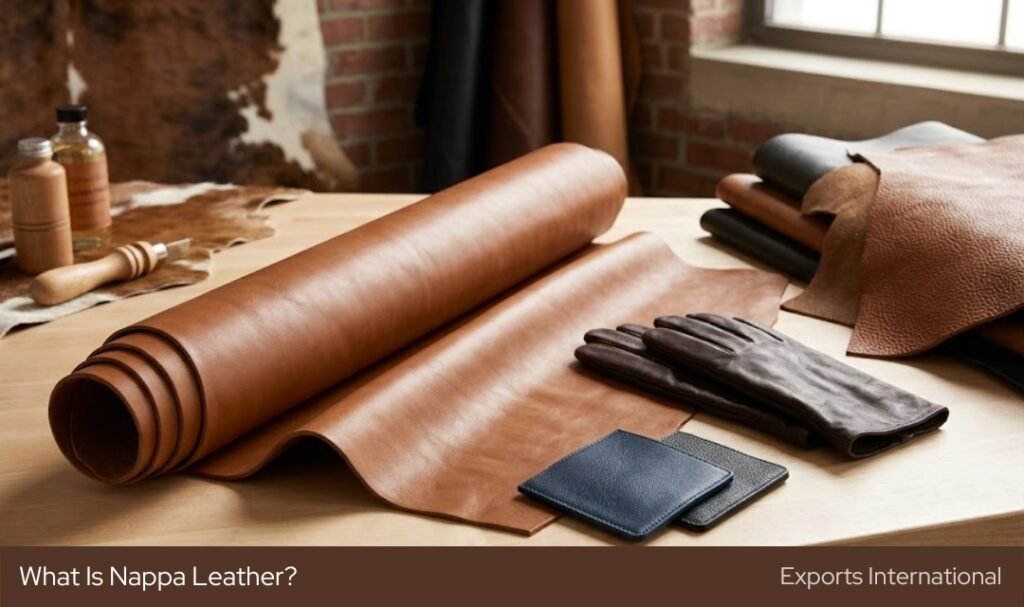
Its softness and drape make it ideal for anything that touches the body or needs to look refined:
- Luxury handbags and clutches
- Leather gloves
- Jackets, skirts, and soft garments
- Car interiors (BMW, Mercedes, Porsche all use nappa leather in premium trims)
- Upholstered furniture
- Soft wallets and cardholders
- Watch straps
It is not the right choice for anything that needs real structural rigidity, like heavy-duty belts, holsters, or saddlery. For those, veg-tanned full grain leather is a better fit.
The One Thing to Watch Out For
Because “nappa” refers to a process rather than a specific regulated standard, the term gets used loosely. Some brands label low-quality chrome-tanned cowhide as nappa leather. Some even use it on split leather or corrected grain leather that has been heavily coated to appear smooth.
Genuine nappa leather should:
- Feel soft and warm immediately, not stiff or plasticky
- Smell like real leather, not chemicals
- Have a fine, natural grain visible on the surface
- Flex without cracking or creasing sharply
If the price seems very low for something being called nappa leather, it is probably not the real thing, or the hide quality underneath is cheap.
Is Nappa Leather Worth Buying?
If softness and a premium look are what you need for a product, yes. For bags, gloves, car interiors, and garments, nappa leather is genuinely excellent. It drapes well, it looks sophisticated, and it is real leather.
The tradeoff is that it scratches more easily than a thick full-grain belt leather and requires a bit more care. If you need leather that takes abuse, look at veg-tanned full grain. If you want something that feels exceptional and looks polished, nappa is hard to beat.
About MB Exports
At MB Exports, we manufacture and export genuine leather goods from India, including products made from nappa-finished leather. We are transparent about the hides and processes that go into every product we make.
If you are sourcing premium leather goods for your brand, get in touch with our team.