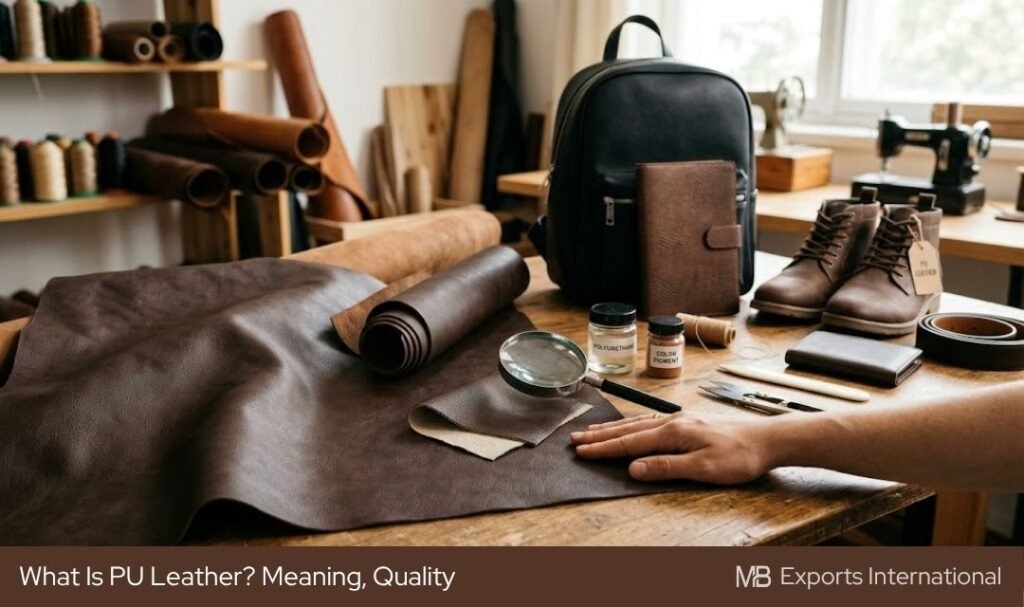
PU leather is everywhere right now. Bags, sofas, car seats, shoes, jackets. The price looks right, the surface looks like leather, and the label says leather-adjacent things without actually saying leather.
So what is it? And should you buy it?
What PU Leather Actually Is
PU stands for polyurethane. It is a type of plastic.
PU leather is a synthetic material made by coating a fabric base (usually polyester or cotton) with a layer of polyurethane, then pressing a grain pattern into the surface to mimic the look of real leather.
There is no animal hide involved. No tanning. No natural grain. Just a plastic coating on fabric, textured to look like the real thing.
Some PU leather is made on a base of split leather, the low-grade fibrous underside of a real hide. This version is sometimes called bicast leather. It contains some real leather material but still behaves like PU because the polyurethane coating dominates the surface. It is also not vegan.
In both cases, the look is the same. The lifespan is similar. The performance is significantly lower than real leather.
What Does PU Leather Mean on a Label?
When you see “PU leather” on a label, it means the product is not real leather. It is a synthetic substitute.
Other names that mean the same thing:
- Faux leather
- Vegan leather
- Synthetic leather
- Artificial leather
- Leatherette
- Bicast leather (partially real, mostly synthetic)
If the label says any of these, you are not buying animal hide leather. You are buying a man-made material that looks like it.
Is PU Leather Real Leather?
No. Not in the traditional sense.
Real leather is made from tanned animal hide. It has a natural grain, breathes, absorbs oils, develops a patina, and lasts for decades with basic care.
PU leather is manufactured plastic on fabric. It does not breathe, does not absorb, does not develop a patina, and does not last decades. It looks like leather on day one. It starts peeling within a few years.
What Is PU Leather Good For?
It is not all bad. PU has real advantages in the right context:
It is cheap. Significantly cheaper to produce than real leather, which brings the price down for the buyer.
It is easy to clean. The plastic surface does not absorb stains. Wipe it off with a damp cloth. Done.
It is water resistant. Rain, spills, and humidity sit on the surface rather than soaking in.
It comes in any colour. The synthetic surface takes dye in every shade imaginable, including colours that are difficult or impossible to achieve with natural leather.
It is vegan (100% PU versions). No animal products involved in production.
When to Buy PU Leather
PU makes sense when:
- Budget is the main constraint and longevity is not a priority
- You need a specific colour that does not exist in natural leather
- It is a vegan requirement, non-negotiable
- The item is for short-term or occasional use
It does not make sense when:
- You need something that will last years of daily use
- You are buying a quality bag, belt, or wallet as a long-term investment
- You care how the item ages and looks in five years
The mistake most people make is paying mid to high prices for PU leather that looks premium in a photo but starts failing within two years. At that price point, real leather is the smarter buy.
About MB Exports
At MB Exports, we manufacture and export real leather goods from India. We work with full grain and top grain leather because those are the grades that hold up and earn repeat business from buyers around the world.
If you are sourcing leather goods for your brand and want a manufacturer who is straight about materials, get in touch with our team.